
Request to Provide a Continuing Education Program at the AIA Central Oklahoma Office
Cocktails & Credits on October 7

Low Slope Roofing Systems
Low slope roofing systems play a critical role in protecting buildings while influencing long-term performance, energy efficiency, maintenance, and lifecycle costs. With multiple roofing technologies available, architects must understand the strengths, limitations, and appropriate applications of each system to make informed design decisions.
This session provides an overview of today’s most commonly used low slope roofing systems, including their history, composition, installation methods, and compatible substrates. Participants will compare the advantages and disadvantages of various systems, examine factors that influence system selection, and review best practices for detailing and installation. Whether designing new construction or evaluating replacement options, attendees will gain practical knowledge to specify roofing systems that balance performance, durability, and project goals.
Learning Objectives:
-Apply best practices for selecting and specifying low slope roofing systems based on building type, climate, performance requirements, and project objectives.
-Identify the most commonly used low slope roofing systems and understand their historical development and typical applications.
-Understand the components, assemblies, installation methods, and substrate requirements associated with various low slope roofing systems.
-Compare the advantages and limitations of different roofing systems, including considerations for durability, maintenance, sustainability, and lifecycle cost.
Lunch & Learn on October 13
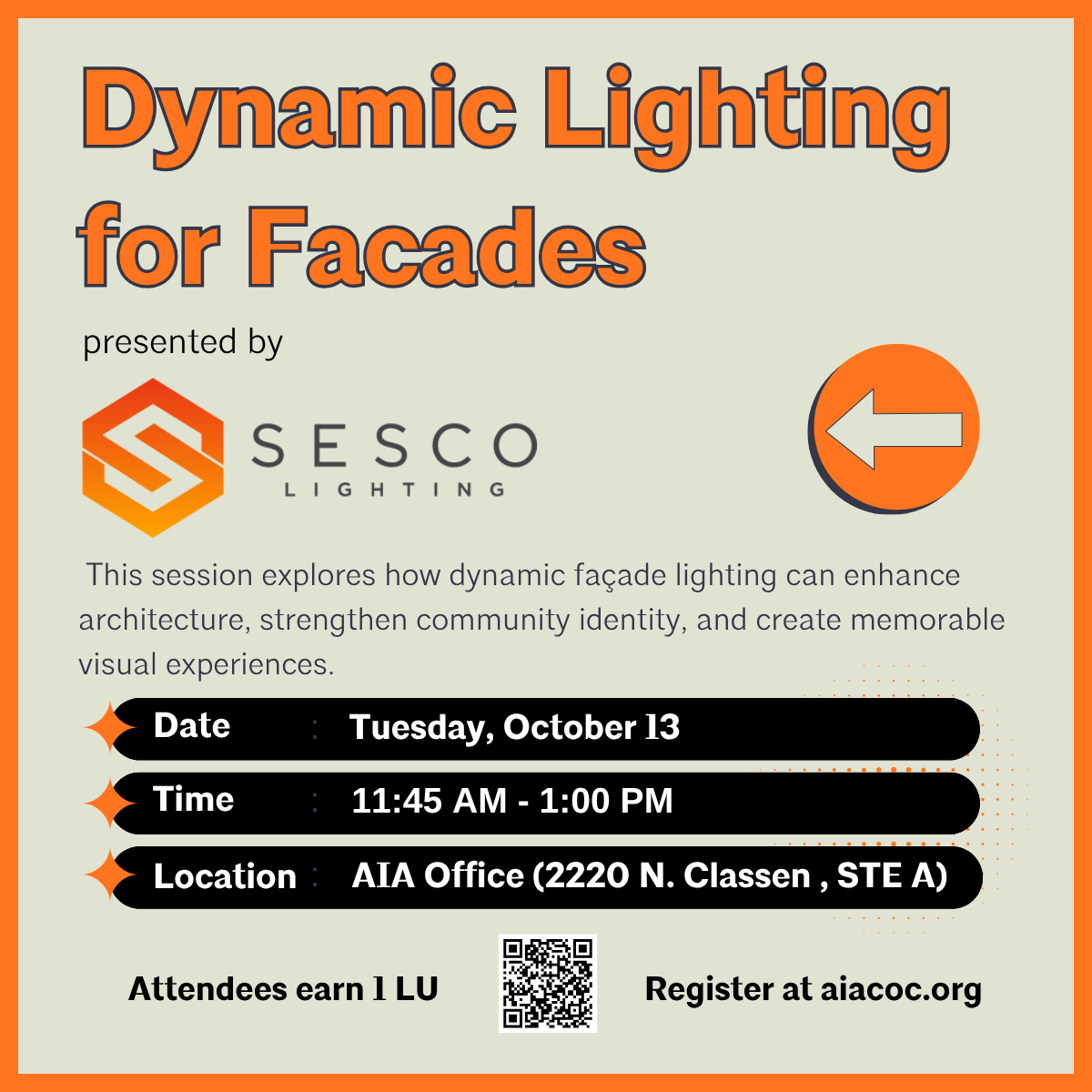
Dynamic Lighting for Facades
presented by SESCO Lighting
Lighting has the power to transform a building long after the sun goes down. This session explores how dynamic façade lighting can enhance architecture, strengthen community identity, and create memorable visual experiences. Participants will learn how to evaluate lighting opportunities for both new construction and existing buildings, compare design approaches using industry best practices, and understand the components that make up modern dynamic lighting control systems.
The program will also introduce the content creation process behind dynamic lighting displays, including key design principles for developing engaging visual experiences. Through real-world examples, attendees will discover how thoughtfully designed façade lighting can increase placemaking, support economic development, elevate civic pride, and create lasting value for owners and communities alike.
Attendees will earn 1 LU.
Tuesday, October 13
11:45 am – 1:00 pm
AIA Office at 2220 N. Classen Blvd., Suite A, OKC
